
Antibiotic resistance is a global health threat
According to the World Health Organization (WHO), antibiotic resistance is one of the greatest health threats worldwide. If antibiotics lose their efficacy, the entire healthcare sector will soon been in trouble. Prevention of antibiotic resistance must be taken seriously, so further research on this topic is necessary.Published: 2.4.2026
Text: Kati Räisänen
Editing: Viestintätoimisto Jokiranta Oy
Images: Shutterstock
Antibiotic resistance refers to the capacity of bacteria to withstand antibiotic drugs that are used to treat infections caused by them; in other words, the bacteria develop a resistance to antibiotics. As a result, a particular antibiotic can no longer be used to treat an infection caused by the resistant bacterium. Resistant bacteria spread easily from one country and continent to another.
In 2019, antibiotic resistance was the direct cause of 1.27 million deaths and contributed to almost five million deaths worldwide. In hospitals, this is reflected in the reduced selection of effective treatment options, prolonged treatment periods and, sometimes, in situations where antibiotics have completely lost their efficacy.
Ineffective antibiotics lead to high expenses
Antibiotic resistance poses a threat to the entire healthcare sector since, without effective antibiotics, modern healthcare will be jeopardized. The existence of effective antibiotics plays a crucial role in terms of, for example, major surgical operations, protection during cancer therapies and the treatment of neonatal infections.
If antibiotics lose their efficacy, there will be consequences not only for the patients and their treatment, but also for the economy. Extended treatment periods, the higher cost of antibiotics and an increasing number of healthy years of life lost result in direct and indirect expenditure for society. On a global scale, the burden on national economies amounts to hundreds of billions of euros.
The situation is worsening in Finland as well
From an international perspective, the situation in Finland is still relatively good as far as antibiotic resistance is concerned, but signs of a negative trend are being seen here as well. According to a report issued by the European Centre for Disease Prevention and Control (ECDC), the greatest increase in the resistance-related disease burden in Europe can be attributed to antibiotic-resistant Escherichia coli. E. coli is a common cause of urinary tract infections, but it also causes the majority of more severe bacterial infections. In Europe, the increasing resistance of E. coli to effective third-generation cephalosporins antibiotics is a significant problem in Europe, and it is becoming more common in Finland as well.
Klebsiella pneumoniae has also grown resistant to third-generation cephalosporins, both in Europe and in Finland. It easily develops various resistance characteristics under selective antibiotic pressure. K. pneumoniae causes infections especially in vulnerable patients in healthcare facilities.
Previous research has shown that the proportion of blood culture findings of third-generation cephalosporin-resistant E. coli and K. pneumoniae has increased considerably in Finland in the 2000s – today, they represent a considerable share of blood culture findings.
The resistance is largely based on ESBL (Extended Spectrum Beta Lactamases) enzymes that hydrolyze cephalosporins. Third-generation cephalosporin-resistance narrows down treatment options and increases the pressure to use last resort antibiotics, i.e. carbapenems.
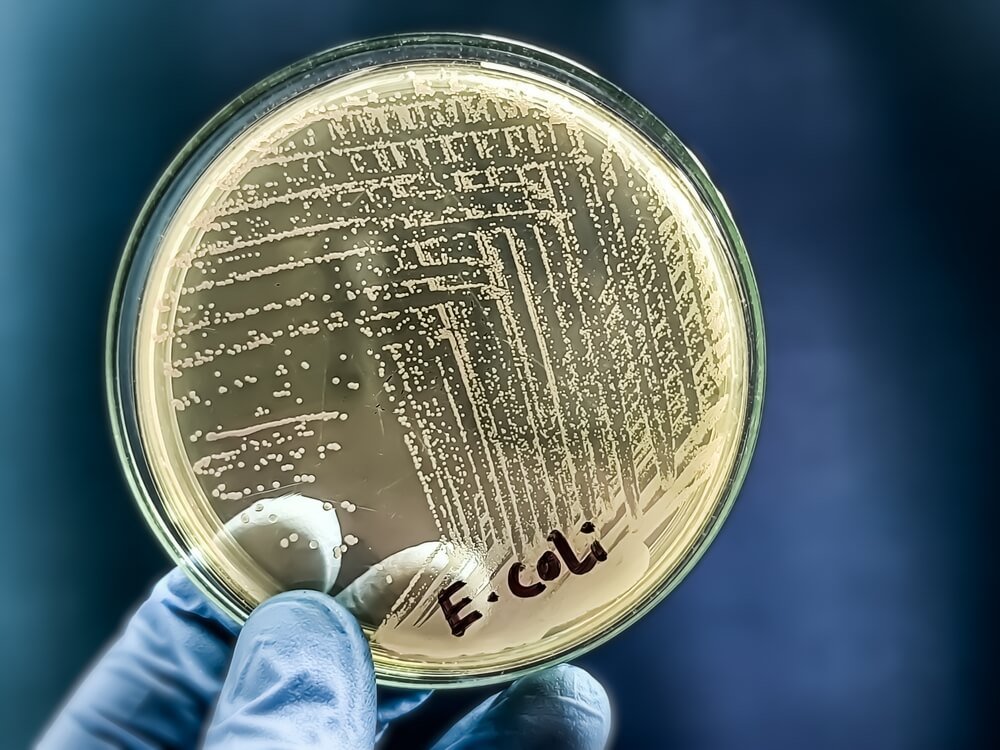
Our team is exploring the mechanisms of antibiotic resistance
Our research team is exploring the incidence of severe infections caused by third-generation cephalosporin-resistant E. coli and K. pneumoniae in Finland during 2014–2024. The research is based on data obtained from the National Infectious Disease and Hospital Infection registers. For the analysis of bacterial relatedness, pathogenic capacity and resistance characteristics, we apply whole-genome sequencing as our primary laboratory method.
Whole-genome sequencing can be used to determine the entirety of the genetic structure of a bacterium. It helps us to investigate which mechanisms (genes) are causing resistance, whether the bacterial strains are diversified or closely related genetically, and if internationally known bacterial clones are occurring in Finland. The genetic information is important as it helps to distinguish between occasional cases of resistance and situations where a troublesome bacterial strain has spread widely.
Research provides a wealth of benefits
Antibiotic resistance has impacts not only on the healthcare sector but also society at large. Therefore, it is essential for us to have access to high-standard surveillance and research methods for the identification of problems. At the same time, it is clear that the prevention of antibiotic resistance calls for continual efforts and decisions based on researched and accurate information.
Research knowledge provides Finland with a wealth of benefits since a better understanding of the characteristics of antibiotic-resistant bacteria and their spreading will help us to prevent and tackle epidemics caused by resistant bacteria at their early stages.
Moreover, genomic data will clarify the picture of the types of resistance and pathogenic mechanisms found in the bacterial strains isolated in Finland. This will help steer antibiotic treatments for severe, life-threatening infections.
The EU has set a target for the Member States to reduce the incidence of infections involving antibiotic-resistant bacteria by the year 2030. The results of our research will help to evaluate whether the current development is moving in the right direction and if anything should be done differently.

Kati Räisänen, PhD, Docent in Molecular Microbiology, earned her doctoral degree from the University of Turku in 2023 with a dissertation entitled Molecular surveillance of carbapenemase-producing Enterobacterales in Finland. Currently, she works as Senior Specialist at the Finnish Institute for Health and Welfare (THL) and is conducting surveillance of antibiotic resistance and multidrug-resistant bacteria in Finland.
Sources:
- Antimicrobial Resistance Collaborators. Global burden of bacterial antimicrobial resistance in 2019: a systematic analysis. Lancet. 2022 Feb 12;399(10325):629-655. doi: 10.1016/S0140-6736(21)02724-0. Epub 2022 Jan 19. Erratum in: Lancet. 2022 Oct 1;400(10358):1102. doi: 10.1016/S0140-6736(21)02653-2.
- European Centre for Disease Prevention and Control (ECDC). Assessing the health burden of infections with antibiotic-resistant bacteria in the EU/EEA, 2016–2020. Stockholm: ECDC; 2022. Available at: https://www.ecdc.europa.eu/sites/default/files/documents/Health-burden-infections-antibiotic-resistant-bacteria.pdf
- Martelius T, Jalava J, Kärki T, Möttönen T, Ollgren J, Lyytikäinen O; Hospital Infection Surveillance team. Nosocomial bloodstream infections caused by Escherichia coli and Klebsiella pneumoniae resistant to third-generation cephalosporins, Finland, 1999-2013: Trends, patient characteristics and mortality. Infect Dis (Lond). 2016;48(3):229-34. doi: 10.3109/23744235.2015.1109135. Epub 2015 Nov 18.
- Ilmavirta H, Ollgren J, Räisänen K, Kinnunen T, Hakanen AJ, Jalava J, Lyytikäinen O. Increasing proportions of extended-spectrum β-lactamase-producing isolates among Escherichia coli from urine and bloodstream infections: results from a nationwide surveillance network, Finland, 2008 to 2019. Euro Surveill. 2023 Oct 28(43):2200934. doi:10.2807/1560-7917.ES.2023.28.43.2200934.
- Ilmavirta H, Ollgren J, Räisänen K, Kinnunen T, Hakanen AJ, Rantakokko-Jalava K, Jalava J, Lyytikäinen O. Impact of the COVID-19 pandemic on extended-spectrum β-lactamase producing Escherichia coli in urinary tract and blood stream infections: results from a nationwide surveillance network, Finland, 2018 to 2022. Antimicrob Resist Infect Control. 2024 Jul 6;13(1):72. doi: 10.1186/s13756-024-01427-z.
- Ilmavirta H, Ollgren J, Räisänen K, Kinnunen T, Jalava J, Lyytikäinen O. Epidemiology and risk factors of Escherichia coli bloodstream infections associated with extended-spectrum beta-lactamase production: a national surveillance and data linkage study, Finland, 2018 to 2023. Euro Surveill. 2025 Oct;30(40):2500196. doi: 10.2807/1560-7917.ES.2025.30.40.2500196.