
Sari Multala, Minister of Climate and the Environment: Further collaboration is needed to restore the state of the Archipelago Sea
Minister Sari Multala, a former World Champion sailor who has enjoyed summers at sea throughout her life, has personally witnessed how the state of the Archipelago Sea has worsened. According to Multala, the work done to save the Baltic Sea has been productive, but further collaboration is still needed to restore the state of the Archipelago Sea, in particular.Published: 18.3.2026
Text: Leena Hulsi / Viestintätoimisto Jokiranta Oy
Main image: Henri Korpi
The Archipelago Sea, known as the most beautiful archipelago in the world, and the Baltic Sea as a whole were subjected to nutrient loading without a second thought for decades until, in the 1970s, eutrophication was identified as an environmental issue. The harmful development, however, had started much earlier as a result of industrialisation and agriculture, and was further accelerated by fish farming that began in the 1980s.
“Over the past 20 years, the state of the Baltic Sea has remained relatively stable, thanks to the reduction in the amounts of wastewaters and nutrients entering the sea. Local advances have been achieved through protection measures, and there are faint signs of hope in sight. However, the overall picture of the state of the sea is not good”, says Sari Multala, Minister of Climate and the Environment.
“The eutrophication of the Archipelago Sea continues, which is a serious threat to marine biodiversity. It unfortunately takes a long time to see the effects of any implemented measures. The state of the sea was allowed to deteriorate for decades, so it is clear that the restoration process will also take its time”, Multala adds.
Minister Multala is pleased to see that people’s understanding about the state of the sea has increased in recent years and that they are motivated to act for the benefit of the marine environment.
“Today, the situation is much better than in the 1980s or 1990s when the underlying causes were not yet sufficiently known. For example, wastewaters were discharged directly into the sea, because of a lack of knowledge and legislation. Progress has been made, but there is still a lot to do before the Archipelago Sea can be removed from the Hot Spot list.”
Agriculture is still the largest polluter
The Hot Spot list drawn up by the Helsinki Commission (HELCOM) originally included a total of 162 sites of major polluters, that is, sources of industrial, municipal or agricultural emissions that burdened badly the sea. By the year 2020, the majority of the burdened areas were successfully cleaned, but the Archipelago Sea can still be found on the list.
“The main problem is that the volume of nutrients flowing from the fields to the Archipelago Sea is still excessive. Endeavours to remedy the situation include, for example, the Roadmap for agriculture and related water protection, which was published as part of the Government’s Archipelago Sea Programme in 2021”, explains Multala.
The Roadmap includes a list of measures to be tested in pilot areas, specifically the catchment areas of the rivers Aurajoki and Paimionjoki and the sea area around Kimitoön island. The aim is to have the Archipelago Sea removed from the Hot Spot list by 2027.
Of the tested measures, Multala mentions the KIPSI project, in which phosphorus leaching has been successfully reduced by spreading gypsum on arable lands. The use of gypsum on fields is currently being funded through the AHTI Programme of the Ministry of the Environment.
“The spreading of gypsum on the fields has proven successful, but the method is not suitable for all types of fields. Where gypsum is not an option, it is possible to reduce the phosphorus loading by using soil conditioners like fibre sludge or structure lime.”
“Since fibre sludge and structure lime have yield-increasing effects, the EU legislation does not allow for a full compensation for their use, whereas gypsum is supplied to farmers free of charge”, Multala adds.
Promising outcomes have also been achieved by establishing protection zones with perennial vegetation along waterways, which will prevent soil and nutrients from ending up in the sea.
“Farmers don’t want the nutrients to be flowing into the sea but, rather, for them to stay where they are needed, that is, on the fields. Farmers are also actively seeking solutions and working cooperatively with various actors. We wish to encourage this work by offering tools and funding through the Archipelago Sea Programme.”
It is vital for all those who make use of the sea in one way or another to do their share to save the Archipelago Sea.
Results-based support
Minister Multala is hoping to see growth in the use and production of recycled fertilisers. A self-sufficient fertiliser industry is important also in terms of national security of supply and food production.
Promotion of environmental actions calls for financial support and different funding models, especially in their initial phases.
“Last year, funding of around 6 million euro was granted for a project aimed at advancing the recycling of nutrient resources. By increasing the use of recycled nutrients, it is possible to significantly reduce the nutrient burden on waterways”, says Multala.
This year, a new type of results-based support model is being piloted to reduce phosphorus emissions from agriculture. In the pilot project, support will be granted on the basis of measurable results instead of, for example, land area.
“The results-based support is targeted to farmers within the Archipelago Sea catchment area and it can be sought for fields with a high level of phosphorus. The support will be paid on the basis of an actual decrease in the phosphorus level”, explains Multala.
For a reliable verification of results, phosphorus levels are assessed from soil samples at the baseline and the end of the project. The measured data is used to ensure the most effective allocation of support.
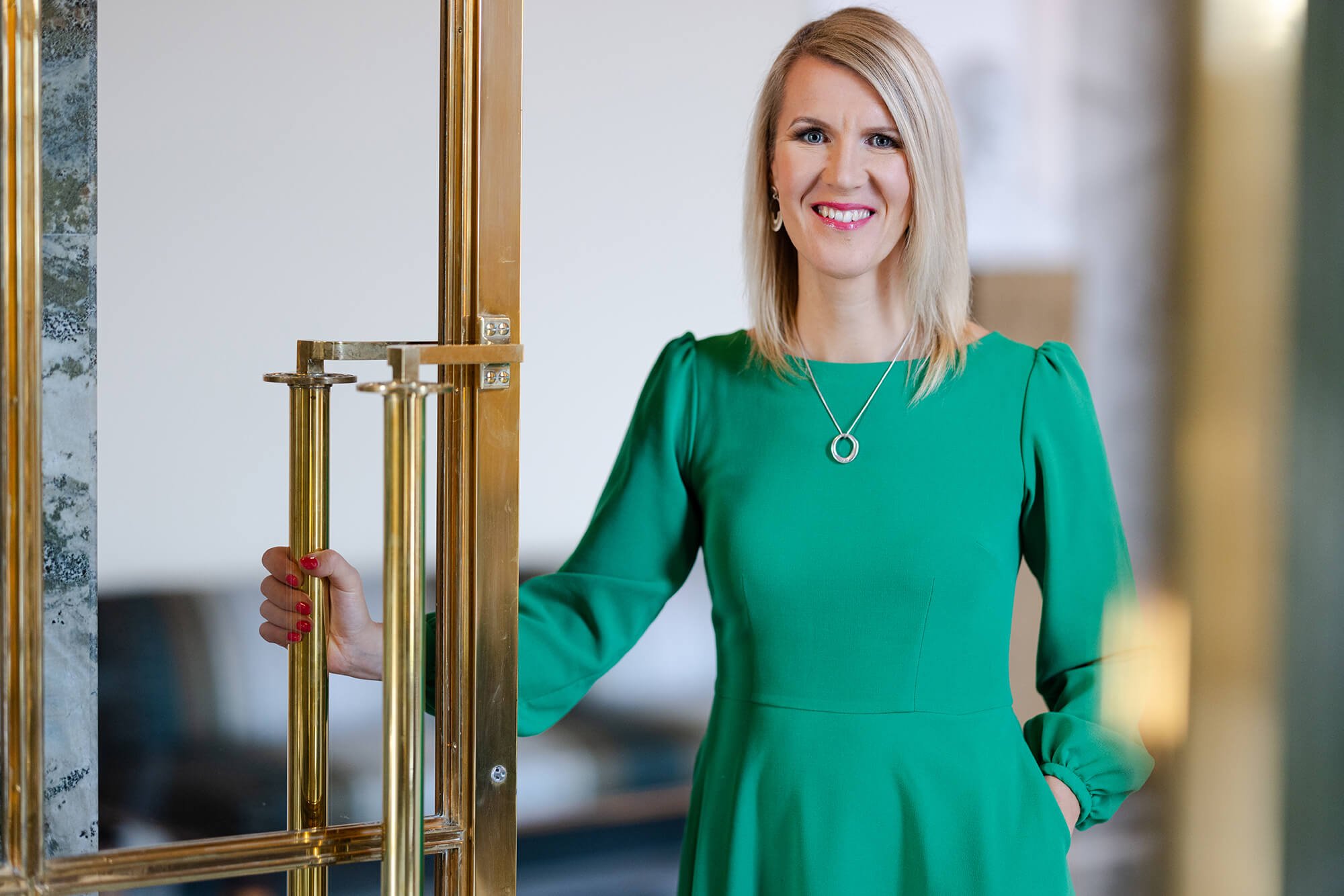
– In 2026, a new type of results-based support model is being piloted to reduce phosphorus emissions from agriculture, says the Minister of Climate and the Environment Sari Multala.
Persistence and patience are required
According to Multala, it is possible to reverse the development of the state of the Archipelago Sea through continued goal-oriented collaboration.
“A lot has been done to improve the situation and the promotion of best practices must continue. Both persistence and patience are required for tangible results.”
In the Minister’s opinion, the decision-makers are well aware of the additional challenges brought by climate change.
“The Finnish Environment Institute (SYKE) is continually monitoring the state of the sea, but the impacts of climate change make it increasingly harder to achieve the goals, while also slowing down improvements in the state of the sea”, says Multala.
The globally unique time-series research conducted by the Archipelago Research Institute of the University of Turku helps us to understand the changes over time.
“Researched information is needed for the planning of measures and the evaluation of their impacts. Decision-makers must have the latest knowledge at their disposal”, Multala stresses.
A passionate sailor who loves to spend her summers at sea, the Minister hopes that everyone who spends time on or around the sea would be moved to engage in saving the Archipelago Sea.
“It is vital for all those who make use of the sea in one way or another to do their share”, appeals Sari Multala.