
Behind the Art: Viivi Saikkonen
According to photographic artist Viivi Saikkonen, art can challenge existing structures, convey knowledge, evoke emotions and bring joy into life. She is currently producing a mini-series based on videos filmed by her biologist parents, focusing on Antarctica and climate change research.Published: 28.5.2026
Text: Viivi Saikkonen
Editing: Viestintätoimisto Jokiranta Oy
How did you become an artist?
I have loved drawing and photography ever since I was a child. At an upper secondary school specialising in visual arts, I realised that making art could also become a profession. I was greatly inspired by my photography teacher, who encouraged and supported my interest in darkroom work.
I studied photography at the Royal Academy of Art in The Hague for four years. I completed a traineeship as an assistant to artist Hertta Kiiski, which enabled me to take part in my first public group exhibition (Avantgarden, Turku, 2021). After graduating from The Hague, I was selected for the Generation 2023 exhibition at Amos Rex Museum, which led to an invitation the following year to Vaal Gallery in Tallinn.
What is your relationship with nature like?
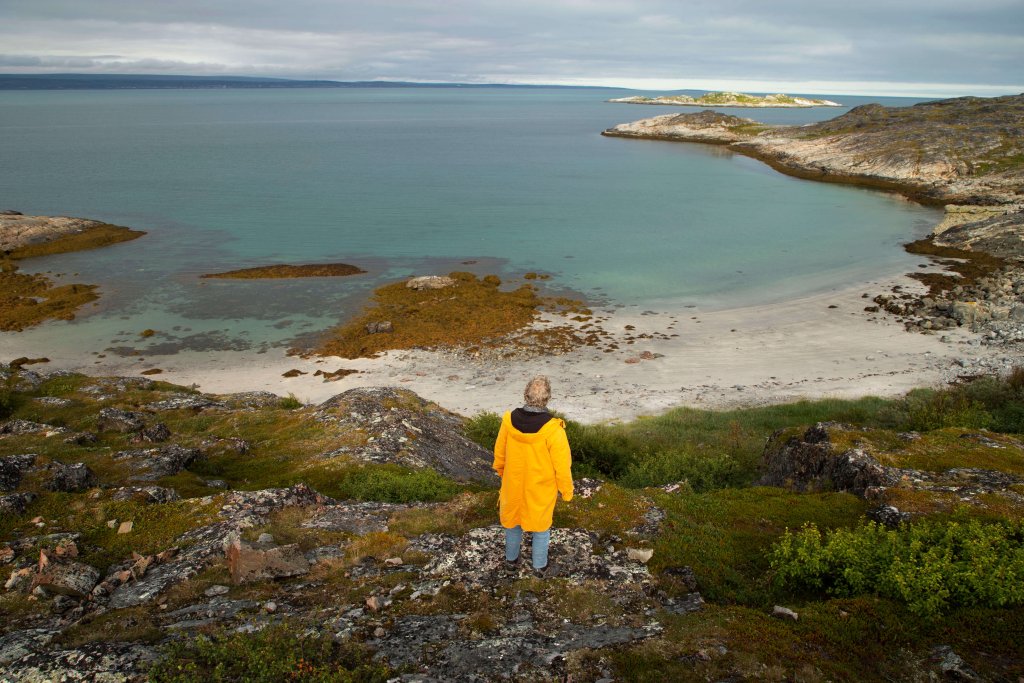
Since childhood, thanks to my parents and my scouting hobby, I have spent a great deal of time in nature. Through scouting, I became familiar with sailing, as a result of which the archipelago and the sea have become important elements for me. Together with my parents, I spent much of my childhood at the University of Turku’s Kevo Research Station, and consequently in northern environments. Nature represents wellbeing and grounding for me amid all the hectic pace and chaos.
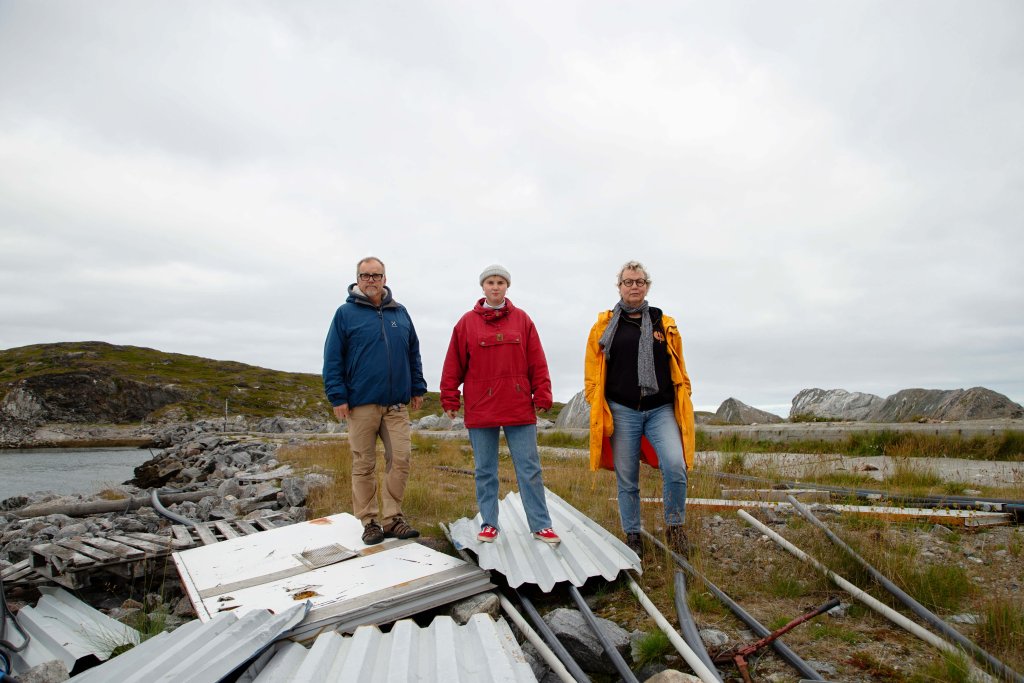
Climate change has been present in the media for decades: in less than twenty years, the greenhouse effect has become a climate crisis. In the research my parents, Marjo Helander and Kari Saikkonen, have conducted for over a decade, climate change has been a central theme. Because of them, my interest in the changes climate change causes in nature – and my concern for the future – has always been part of my life.
Tell us a bit about your project that the Foundation is funding.
At the beginning of 2023, my biologist parents set off on a research expedition to Antarctica. We agreed that they would take my camera with them and film as much video material as possible during their journey. My father, who has always been keen on photography, was enthusiastic about the idea. My mother was also immediately excited and actively contributing ideas about what they could film. I received around 150 hours of footage as souvenirs, from which I am currently producing a mini-series.
The project has been funded by the Sakari Alhopuro Foundation, both through a grant awarded in summer 2025 and again with a new grant in 2026. The Finnish Advisory Board on Research Integrity supported the project with an eight-month working grant in 2025–2026. My sincere thanks to both funders for their support and for making the realisation of the project possible.
Art can challenge existing structures, convey knowledge, evoke emotions, and bring joy to life.
What does art mean to you?
As an artist, it is difficult to imagine one’s own life – let alone society – without art. Exhibitions in museums and galleries are only one part of everything around us that is art. If art were completely removed from our environment and our lives, life would be rather dry and dull. Cultural budget cuts, general indifference towards culture and art, and constant capitalist prioritisation have already caused significant damage – both to the cultural field and its practitioners, as well as to the streetscape and Finnish cultural heritage.
Art offers an opportunity to examine our world and society from different perspectives. At times, it also creates a channel for escaping reality and dreaming of a different one. Through art, I have learned how meaningful it is to look at things calmly and with patience. Often, in the present moment, one cannot see what truly has value and meaning. Seeds germinate slowly, and the bloom is often only visible once it is light again. Conversely, one sometimes realises what has been lost only after it is gone.
What has been the greatest art experience of your life?
When I saw Ren Hang’s works for the first time at Fotografiska in Stockholm in 2017, I simultaneously experienced everything that art can be at its best. Art can challenge existing structures, convey knowledge, evoke emotions and bring joy into life. I was inspired by the possibilities of photography and art in a way I had never experienced before. A few days or weeks after visiting the exhibition, Ren Hang passed away. This coincidence deepened the experience even further.
Experiences like this – without death, of course – are what I would like to offer viewers of my own work as well, by doing what I know best: producing visual material. In this way, I can share knowledge and experiences and evoke questions and emotions, whether in the form of video installations or a television series.
The world needs thought-provoking art. This blog series goes behind the art, featuring artists and works supported by the Sakari Alhopuro Foundation. In 2025, the art grants were awarded to artists who address aspects of climate change, biodiversity loss or the state of Finnish nature in their work.