
Atlantic coasts provide a home for many macroalgae species
How do algae protect themselves against damages caused by sunlight?
Plants, algae and photosynthetic bacteria maintain life on Earth. Sunlight is the source of energy for plants and algae, but it is also damaging to them. Macroalgae are an important element in marine ecosystems, and the aim of PhD Heta Mattila’s research is to investigate their means of protection against sunlight.Published: 16.7.2026
Text: Heta Mattila
Editing: Viestintätoimisto Jokiranta Oy
Image: Heta Mattila
The oxygen we breathe and food we eat are almost entirely products of photosynthesis. Oxygen-releasing photosynthesis is vital for the present forms of life. Atmospheric oxygen has facilitated the evolution of efficient cell respiration which, in turn, has enabled human beings and other complex and multicellular organisms to evolve on Earth.
Light – a source of energy and problems
Photosynthesis starts by absorption of light energy by a protein complex known as Photosystem II (PSII), which uses solar energy to break down water into protons and electrons while also releasing oxygen molecules. Electrons and protons are required to transform solar energy into a chemical form, whereas molecular oxygen is actually a side-product in the reaction.
Oxygen is a highly reactive molecule: both oxygen and its various compounds react readily with many other compounds. This oxidative damage produces, for example, non-functional proteins and, if not controlled, will lead to the death of the organism. When the amount of oxygen in the atmosphere initially increased, as a result of the PSII activity, the change probably caused a large-scale wave of extinctions. In order to survive in the new oxygen-rich environment and to be able to utilise cell respiration, the organisms had to develop various means of protection for themselves.
The extent of oxidative damage is particularly large in bright light, but since it is the source of energy for photosynthetic organisms, it cannot be fully avoided. Photosynthetic organisms, such as macroalgae, can usually not escape disadvantageous circumstances either. During the course of evolution, photosynthetic organisms have developed various means to avoid, reduce and repair light-induced damages.
One of these means is the conversion of excessive light energy into a safer form, that is, heat radiation. This protective method can be activated within seconds, which is essential in the often quite suddenly changing natural circumstances. When this means of protection is removed by researchers using, for example, chemical or genetic methods, it turns out that these organisms are usually highly susceptible to bright light and, in particular, sudden changes in the amount of light.
Further macroalgae research is needed
The protective methods of scientific model organisms, especially plants, are already quite well known, even at the molecular level, although new significant findings are still made every now and then. As to other photosynthetic organisms, such as various algae groups, the protective methods are not so well known.
Marine environments can be extremely diversified, and they are of great significance for human well-being and climate change mitigation. Coral reefs are one example of diversified and vulnerable marine environments.
The ‘underwater forests’ formed by macroalgae are less well known, but they also constitute a diverse marine ecosystem. Many macroalgae species, such as the bladder wrack in the Baltic Sea, are key species in their habitats, providing feed and shelter for many other organisms. Macroalgae research is necessary in order to better understand the impacts of climate change on marine ecosystems.
My research project focuses on the study of light-induced damages and related protective mechanisms in certain Bryopsidales macroalgae. These algae are interesting as they lack many important means of protection against light, including the ability to rapidly convert excessive light energy into heat radiation. Thus, one might assume that Bryopsidales algae only exist in dim and stable environments where light damages occur to a lesser extent. The truth is, however, almost the opposite: these algae often live in shallow waters along oceanic coastlines where the movements of waves, clouds and tides expose them regularly to major changes in the amount of light. Moreover, some Bryopsidales algae species have managed to spread into new environments so effectively that they are considered as invasive alien species. My intent is to find and identify the still unknown means that Bryopsidales algae use to survive in bright light.
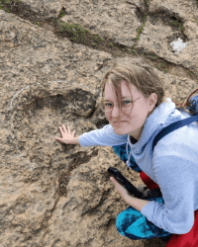
Heta Mattila earned her PhD from the University of Turku, Department of Molecular Plant Biology. Her dissertation dealt with, among other things, light-induced damage to Photosystem II. During a period as post-doctoral researcher in Portugal, she explored the exciting world of macroalgae. Currently, Mattila is working as Academy Research Fellow at the University of Turku.